How to Increase Your Concrete Batching Plant's Daily Throughput
Moving beyond rated capacity: Proven strategies to optimize cycle times and reduce downtime in HZS-series plants.
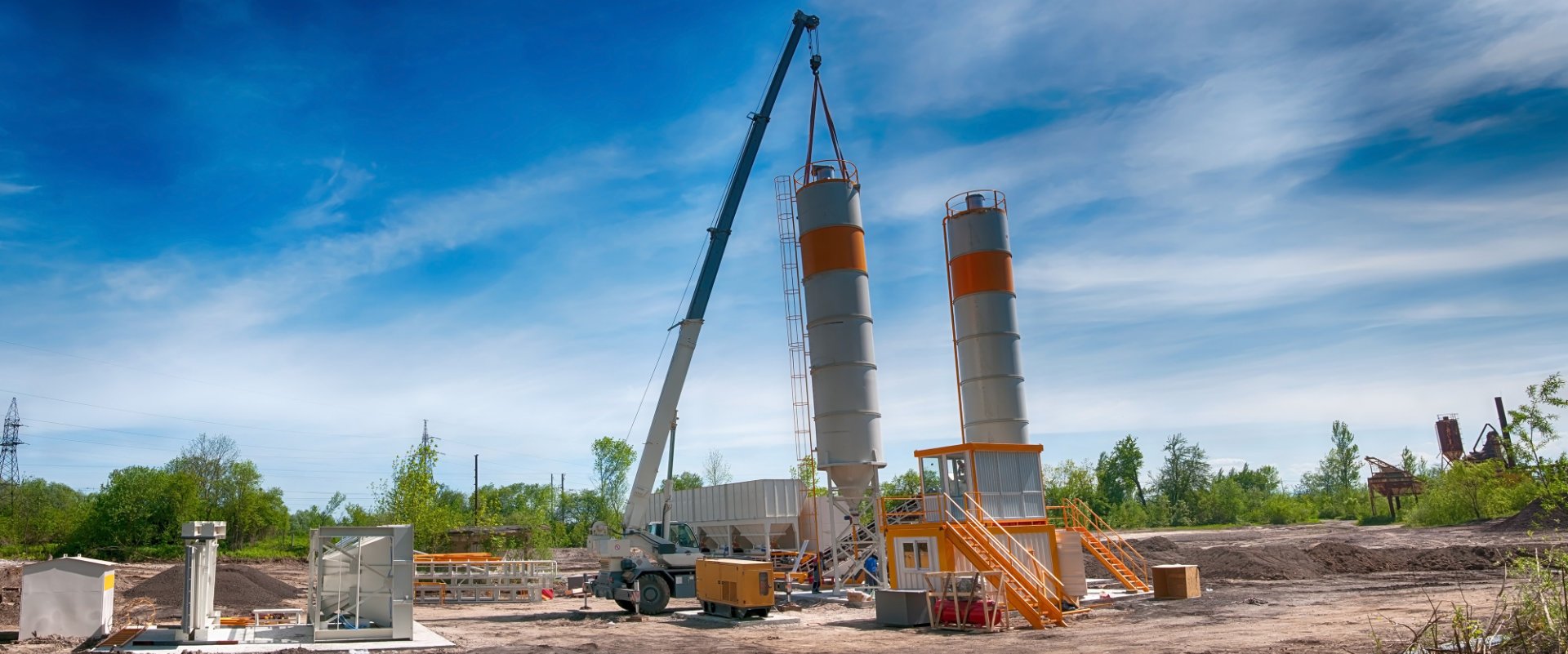
While modern concrete batching technology has evolved significantly over the last 20 years, many site managers find that their actual daily output lags behind the equipment's rated capacity. Whether you are operating an HZS60 or a high-capacity HZS180, achieving peak throughput requires more than just high-spec hardware—it requires operational discipline and technical optimization.
At Xingye Machinery, we’ve analyzed performance data from projects across the Middle East and Southeast Asia to identify the most effective ways to bridge the gap between "theoretical" and "actual" production capacity.
1. Optimize the Mixing Cycle Time
The heart of your plant is the JS-series twin-shaft mixer. A standard mixing cycle includes charging, mixing, and discharging. Even a 5-second delay in the discharge gate operation can reduce your hourly output by 10% over a full shift.
- Check Gate Seals: Worn seals lead to leakage and slower gate response.
- Adjust Mixing Time: Ensure your mixing duration is optimized for the specific concrete grade. High-performance concrete may need longer, but standard mixes can often be streamlined without sacrificing homogeneity.
2. Streamline Material Feeding Systems
Bottlenecks often occur before the material even reaches the mixer. If your aggregate batcher or screw conveyors are undersized or poorly maintained, the mixer sits idle waiting for the next charge.
| Component | Common Bottleneck | Optimization Strategy |
|---|---|---|
| Aggregate Bins | Slow discharge due to moisture | Install vibrators on sand bins to ensure consistent flow. |
| Screw Conveyors | Motor strain or clogging | Regularly inspect flighting and ensure the angle of inclination is within 20-45°. |
| Weighing Hoppers | Calibration drift | Perform weekly sensor zero-point checks to avoid overfilling and cycle delays. |
3. Prioritize Operator Technical Proficiency
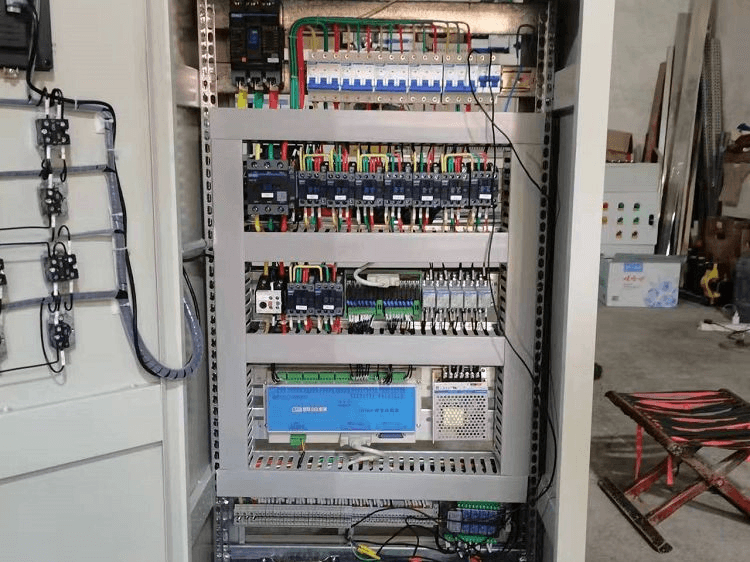
Modern plants utilize PLC-based control systems, but the human element remains critical. An experienced operator can anticipate truck arrivals and manage the "queue" of batches more effectively than a novice. Investing in operator training on the Xingye fully-automatic control system ensures that the software’s efficiency features—such as "drop compensation"—are utilized to their full potential.
4. The "Foundation" Principle: Preventive Maintenance
As noted in our recent engineering audits, a plant is only as fast as its weakest component. We refer to this as the "foundation" of operation. If the mechanical foundation (the structural integrity of the plant) or the operational foundation (maintenance schedule) is weak, high-speed production is impossible.
Key Maintenance Focus Areas:
- Lubrication of the mixer shaft ends to prevent friction-based slowdowns.
- Checking belt tension on the aggregate conveyor to prevent slippage.
- Ensuring air compressors are providing stable pressure for pneumatic valves.
5. Address Environmental Factors
In regions like Saudi Arabia or the UAE, high ambient temperatures can affect the "workability" of the mix and the cooling requirements of the machinery. In these climates, increasing capacity often requires chilled water systems or ice batching to ensure the concrete meets spec without slowing down the mixing process to manage heat of hydration.
Are you looking to audit your current plant's performance? Xingye Machinery provides technical consultations and upgrade kits for HZS-series plants to help you reach your target m³/h. Contact our engineering team today for a customized efficiency roadmap.
Related Posts :