Concrete Mixing Stations: A Technical Guide to HZS Models
Efficiency in every batch: Understanding the engineering behind HZS and 2HZS concrete mixing stations.
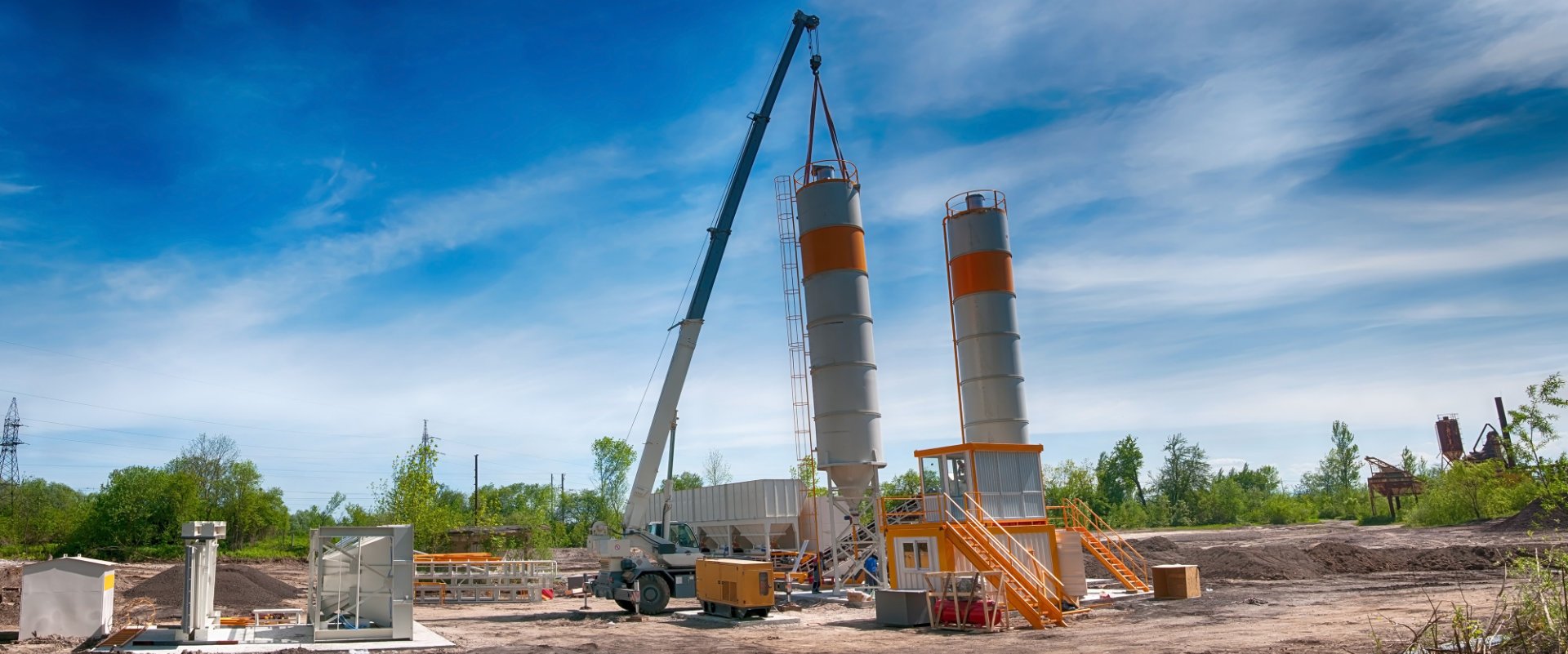
In modern infrastructure development—from Riyadh’s urban expansions to highway projects in Romania—the concrete mixing station (or batching plant) is the heart of the job site. It is not merely a mixer; it is a precision-engineered system designed to ensure chemical consistency, structural integrity, and production efficiency.
Classification by Production Capacity: HZS vs. 2HZS
Selecting the right plant starts with understanding the scale of your project. At Xingye Machinery, we categorize stations based on their configuration and theoretical hourly output.
1. Single-Machine Stations (HZS Series)
The standard HZS series features one mixing host. These are ideal for medium-sized projects where steady, reliable output is required. For example, an HZS60 plant delivers a theoretical 60m³/h using a twin-shaft forced mixer.
2. Double-Machine Stations (2HZS Series)
For high-intensity infrastructure like dams or airports, 2HZS models provide redundancy and double the volume. A 2HZS90 utilizes two independent mixing hosts to achieve 180m³/h. This setup ensures that if one mixer requires maintenance, the project does not grind to a halt.
| Model Type | Mixer Configuration | Ideal Application |
|---|---|---|
| HZS25 - HZS50 | Single Twin-Shaft | Small bridges, rural roads, precast yards |
| HZS60 - HZS180 | Single Twin-Shaft | Commercial concrete, high-rise construction |
| 2HZS Series | Dual Twin-Shaft | Large-scale infrastructure, high-volume RMC plants |
Advanced Control Systems: Solving the Moisture Problem
One of the greatest challenges for engineers in humid Southeast Asian climates or coastal Middle Eastern sites is aggregate moisture drift. A station is only as good as its sensors.
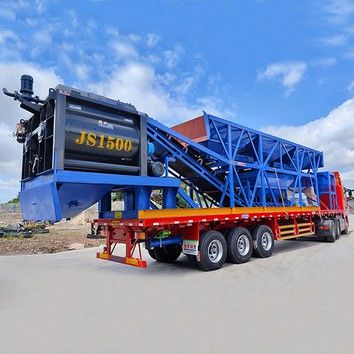
Xingye Machinery’s portable and stationary plants utilize an integrated intelligent control system that features:
- Real-time Moisture Detection: Automatically detects the water content in sand and stone.
- Online Temperature Compensation: Adjusts the mix design in real-time to maintain the desired slump, even in extreme heat.
- Remote Data Sync: Management can monitor production data from the office, ensuring transparency in material consumption and output.
Optimizing for Commercial Concrete (C20 - C50)
Whether you are producing C20 for foundations or C50 high-performance concrete for viaducts, the mixing method matters. Our stations employ the "stone wrapping method," which ensures every aggregate particle is thoroughly coated with cement paste. This significantly improves the compressive strength and workability of the concrete.
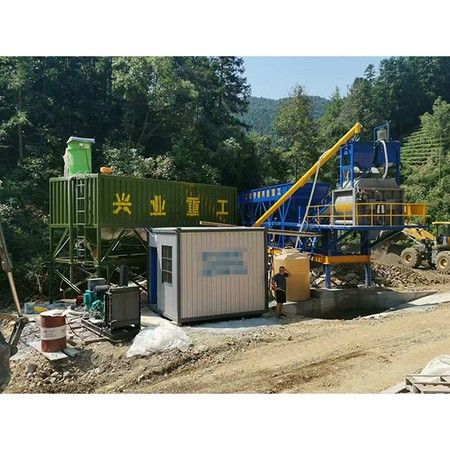
Our plants are designed with a compact footprint and modular layout, making them the preferred choice for:
- Ready-mix concrete (RMC) suppliers
- Highway and bridge contractors
- Cement prefabrication and pipe pile plants
Looking to optimize your site layout? Our engineering team provides custom CAD layouts for HZS series plants to fit your specific terrain and logistics requirements. Contact our technical department for a consultation.
Related Posts :