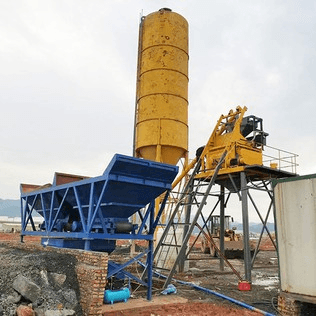
Concrete Batching Plants: Stationary vs. Mobile Solutions
The heart of infrastructure: Understanding the technology behind high-performance concrete production.
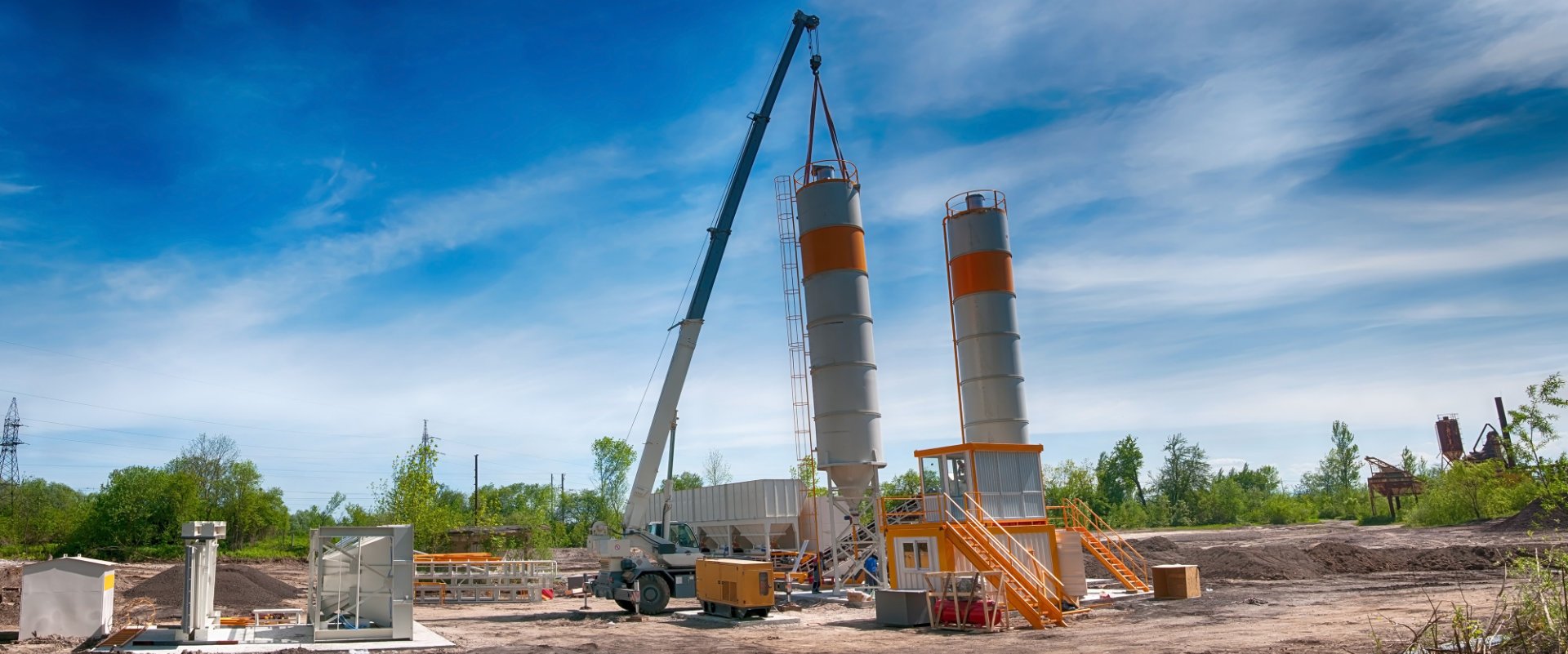
In the global construction industry, the consistency and quality of concrete are the foundations of structural integrity. A concrete batching plant (also known as a mixing station) is more than just a collection of bins and mixers; it is a precision-engineered system designed to combine aggregates, cement, water, and additives into a homogenous mix that meets rigorous engineering standards.
Stationary vs. Mobile: Choosing the Right Configuration
Selecting the right plant configuration depends on your project’s duration, site footprint, and volume requirements. At Xingye Machinery, we categorize these systems into two primary types:
1. Stationary Concrete Batching Plants (HZS Series)
Designed for large-scale infrastructure projects, municipal works, and commercial concrete supply, stationary plants offer the highest stability and output. These are typically used in long-term installations where high-volume production (up to 180m³/h) is required.
- Best for: Bridge construction, high-rise buildings, and precast concrete factories.
- Key Advantage: Enhanced durability and easier maintenance access for 24/7 operations.
2. Mobile & Portable Batching Plants
For projects in remote locations or sites that move frequently (such as road and rail construction), mobile plants offer rapid deployment. These units are often built on a single trailer chassis, allowing for quick relocation and minimal foundation requirements.
- Best for: Highway paving, rural infrastructure, and short-term project sites.
- Key Advantage: Significantly reduced transport costs and faster setup times (often within 2-3 days).
Technical Specifications Comparison
| Feature | Stationary Plants (HZS) | Mobile Plants (YHZS) |
|---|---|---|
| Capacity Range | 25m³/h – 180m³/h | 25m³/h – 100m³/h |
| Foundation Req. | Heavy concrete foundation | Minimal/Steel structure |
| Installation Time | 15–30 days | 2–5 days |
| Mixing System | JS Series Twin-Shaft | JS Series or Planetary |
Precision Engineering: The Core Components
A high-performance mixing station relies on the synchronization of several critical systems:
- The Mixing System: Usually a JS Series twin-shaft mixer, which ensures high homogeneity even with high-viscosity concrete.
- Weighing & Batching: High-precision load cells ensure that cement, water, and aggregates are measured within ±1-2% accuracy, meeting international ISO standards.
- Control System: Modern PLC-based automation allows for recipe management, real-time monitoring, and data logging to prevent human error.
Addressing Modern Site Challenges
Today’s project managers face increasing pressure regarding environmental impact and operational safety. Xingye Machinery integrates dust collection systems and noise-reduction enclosures to ensure compliance with urban environmental regulations in regions like Eastern Europe and Southeast Asia. Furthermore, our plants are engineered to withstand extreme climates—from the high temperatures of the Middle East to the humid monsoon seasons of Asia—ensuring that your calibration remains stable regardless of external conditions.
Whether you are scaling up a commercial concrete business or launching a remote infrastructure project, choosing the right batching technology is critical to avoiding downtime and ensuring structural quality.
Interested in technical drawings or a customized plant layout? Contact our engineering team for a consultation on the HZS or YHZS series.
Related Posts :