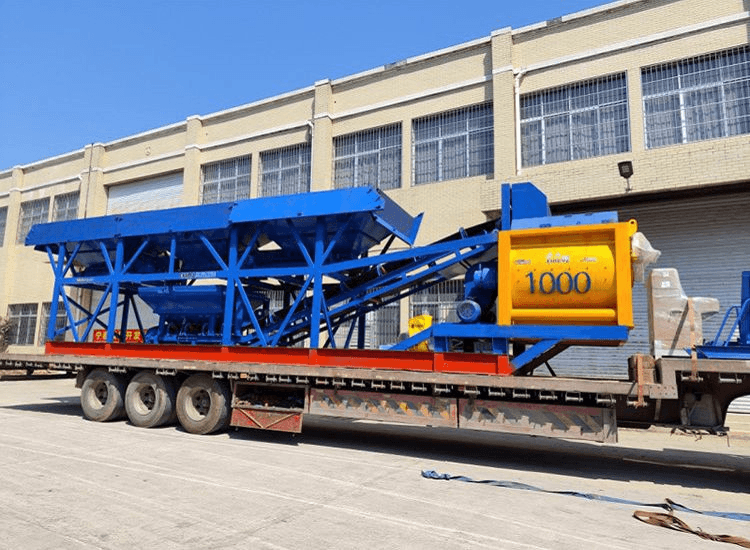
Concrete Plant Downtime: 5 Common Faults & Expert Fixes
Every minute of downtime is lost profit. Learn to diagnose and resolve HZS plant failures before they stall your project.
In the high-stakes world of concrete production, an unexpected equipment failure isn't just an inconvenience—it’s a financial drain. Whether you are operating an HZS90 in the heat of Riyadh or a mobile plant in Southeast Asia, understanding the "why" behind equipment failure is the first step toward maintaining a 99% uptime rate.
At Xingye Machinery, we have analyzed decades of field data to identify the most frequent technical bottlenecks. Here is your engineering guide to diagnosing and fixing common concrete mixing plant faults.
1. The Main Mixer Motor Fails to Start
When your JS-series twin-shaft mixer refuses to engage, the culprit is usually electrical rather than mechanical. Before calling a technician, check the following:
- Phase Loss: Modern control systems will trip if the power grid fluctuates. Check for a lack of phase in the supply line.
- Circuit Breaker Contact: In humid or high-dust environments, contact points can oxidize, leading to poor electrical conductivity.
- Voltage Drop: If the voltage drops below 90% of the rated capacity during peak hours, the motor’s protective relay will prevent start-up.
2. Frequent Air Compressor Cycling
The pneumatic system is the "nervous system" of your plant, controlling the aggregate bins, cement scales, and discharge doors. If your compressor is starting and stopping every few minutes, you are rapidly shortening its lifespan.
The Fix: This is often caused by an improperly set pressure relay. Adjust the pressure difference value (hysteresis) to allow for a wider operating range. Additionally, inspect the air lines for "silent leaks"—small hisses at the solenoid valves that bleed pressure over time.
3. The "Stifled" Mixing Shaft (Mixer Jamming)
Nothing stops a project faster than a jammed mixing shaft. This "stifling" occurs when the torque required exceeds the motor's output. Common causes include:
| Cause | Engineering Detail | Solution |
|---|---|---|
| Material Overload | Exceeding the rated 1m³ or 1.5m³ volume per batch. | Recalibrate batching software limits. |
| Blade-to-Wall Gap | Gap exceeds 5mm, causing aggregate to wedge. | Adjust or replace wear-resistant liners and blades. |
| Voltage Sag | Insufficient torque during the initial mixing phase. | Install a dedicated transformer or stabilizer. |
4. Discharge Door Failure
If the discharge door on your JS mixer won't open or close smoothly, the issue usually lies in the pneumatic or hydraulic actuator. In many HZS plants, a dirty muffler is the hidden culprit. If the air cannot exhaust quickly through the muffler, the cylinder moves sluggishly or stays locked. Regular cleaning of the pneumatic mufflers with solvent can prevent this entire category of failure.
5. Powder Discharge Bottlenecks (Cement & Fly Ash)
When the screw conveyor is turning but no cement reaches the scale, operators often assume a clog. However, if there is no solidification (hydration) in the silo, check the motor rotation. After electrical maintenance, motors are often wired in reverse. A screw conveyor running backward will not move material. Also, inspect the aeration pads in the silo cone; if the cement is "bridging," the discharge port will remain empty despite a functional motor.
Preventative Maintenance Checklist
To avoid these faults, Xingye Machinery recommends a "Shift-Start" inspection:
- Verify sensor accuracy for the weighing hoppers (zero-point calibration).
- Check the tension and alignment of the aggregate inclined belt conveyor.
- Drain the water from the air compressor tank to prevent valve corrosion.
- Ensure the lubrication pump is delivering grease to the mixer shaft-end seals.
Does your plant need a technical audit or genuine spare parts? Our engineering team provides global support for HZS and WBZ series plants to ensure your production never stops. Contact Xingye Machinery today for a specialized maintenance consultation.
Related Posts :