Concrete Mixer Selection Guide: Drum vs. Forced vs. Continuous
Choosing the wrong mixing technology leads to segregation and strength failure. Here is how to match the mixer to your project.
In the world of concrete production, the mixer is the heart of the operation. Whether you are operating a large-scale HZS120 batching plant in Riyadh or a compact mobile setup in Manila, the type of mixer you choose determines the homogeneity, strength, and durability of your final product. Selecting the wrong mixing technology doesn't just slow down production—it risks structural failure due to poor aggregate distribution.
1. Free-Falling (Drum) Mixers: The Gravity Approach
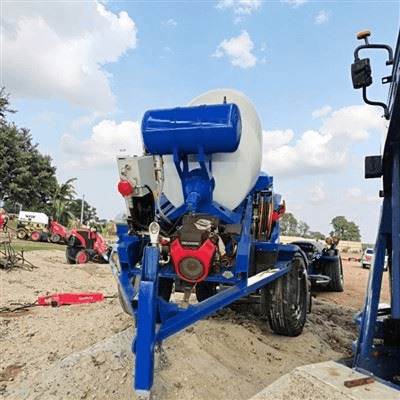
Free-falling mixers, also known as drum mixers, rely on gravity to achieve a blend. Radially arranged blades on the inner wall of the drum lift the materials to a specific height before they drop back down under their own weight. This repetitive lifting and falling action eventually achieves a uniform mix.
Key Characteristics:
- Best For: Plastic concrete with high slump.
- Advantages: Simple mechanical structure, low maintenance requirements, and lower power consumption.
- Limitations: Inefficient for "dry-hard" concrete; longer mixing cycles compared to forced types.
2. Forced Mixers: The Industry Standard for Quality
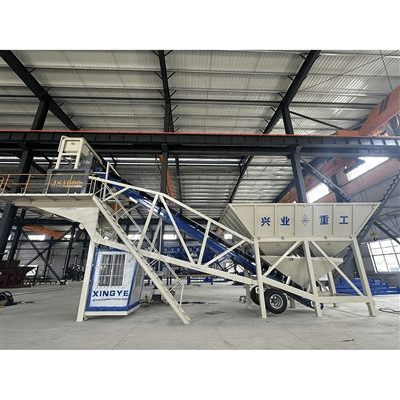
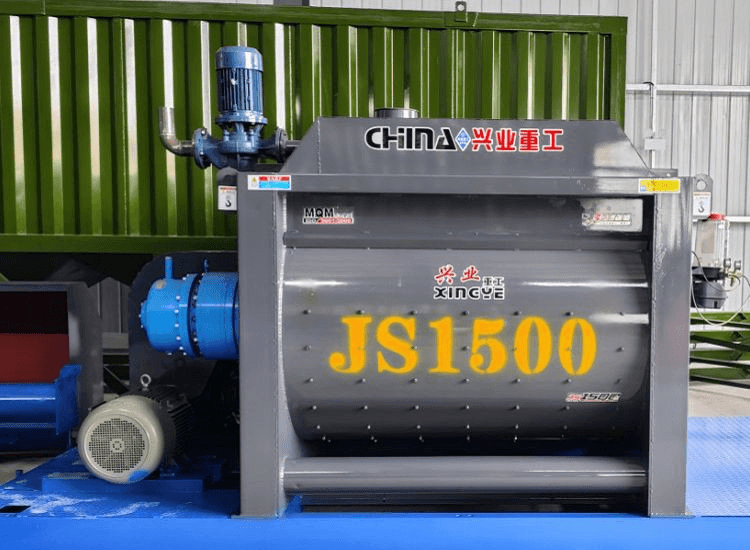
Forced mixers, particularly the JS-series twin-shaft mixers, are the backbone of modern HZS concrete batching plants. Unlike drum mixers, these units use rotating arms and blades to create a powerful cross-flow of materials. This "strong stirring" method ensures that even low-slump, dry-hard concrete is mixed to a high degree of homogeneity in a very short time.
| Mixer Type | Mechanism | Ideal Material | Typical Application |
|---|---|---|---|
| Vertical Shaft (Planetary) | Complex orbital path | Precast, high-performance concrete | Specialized precast factories |
| Twin-Shaft (JS Series) | Counter-rotating horizontal shafts | Dry-hard, plastic, lightweight aggregate | Commercial HZS batching plants |
Xingye Machinery’s JS-series forced mixers are engineered with high-chromium wear-resistant alloy liners and blades, addressing the common pain point of abrasive wear in high-volume production environments.
3. Continuous Concrete Mixers: High-Volume Output
For massive infrastructure projects like highways or dams where a steady flow of material is required, continuous mixers are the preferred choice. These are equipped with spiral mixing blades. Materials are continuously weighed and fed into the intake, and the mixed concrete is discharged from the opposite end without stopping.
Engineering Insight: Continuous mixers are often used in WBZ-series stabilized soil mixing plants. Their primary advantage is the exceptionally high productivity and short mixing duration, though they require sophisticated automated dosing systems to maintain accuracy.
Summary: Which Mixer Do You Need?
The decision usually comes down to your specific project requirements:
- Small-scale residential or plastic concrete? A drum mixer offers the best ROI.
- Commercial concrete or high-strength structural projects? The JS-series twin-shaft forced mixer is mandatory for meeting international standards like ISO 9001.
- Soil stabilization or massive road foundations? A continuous mixing plant provides the necessary volume.
At Xingye Machinery, we specialize in matching mixing technology to regional climate demands, from the high-heat environments of the Middle East to the rugged logistics of African job sites. If you are unsure which JS-series model fits your HZS plant capacity, contact our engineering team for a technical consultation and CAD layout support.
Related Posts :