

Is Your Mixer Underperforming? How to Calculate Efficiency
Stop guessing your output. Master the engineering formulas that define true concrete mixing efficiency.
In the high-stakes world of commercial concrete production, "efficiency" isn't just a buzzword—it is the difference between a profitable project and a mounting loss. If your JS-series twin-shaft mixer is rated for 60 seconds per batch but is actually taking 75, you are losing 20% of your daily revenue. To fix it, you first need to measure it.
The Core Metric: Unit Volume Mixing Energy (Wv)
The most accurate way for engineers to evaluate a batching plant's performance is through Unit Volume Mixing Energy (Wv). This value represents the total energy work done on a specific volume of concrete to achieve homogeneity.
The calculation formula is:
Wv = Pv × T
Where:
- Wv: Unit volume mixing energy
- Pv: Mixing power per unit volume (kW/m³)
- T: Mixing time (seconds)
For high-performance HZS plants, the goal is to minimize T while ensuring Wv remains high enough to meet strength standards. If your T is too high, it usually points to a mechanical bottleneck or poor aggregate grading.
Calculating Mixing Power (P)
To understand the "Pv" in the formula above, we must look at the mechanical power consumption of the mixer. The empirical formula for mixing power (P) is essential when auditing motor performance or upgrading to high-strength concrete recipes:
P = Np · ρ · n³ · d⁵
| Variable | Description | Impact on Efficiency |
|---|---|---|
| Np | Power Number | Determined by the geometry of the mixing blades and arms. |
| ρ (Rho) | Material Density | Higher density (e.g., heavy-weight concrete) requires exponential power. |
| n | Blade Speed (RPM) | Efficiency increases with the cube of the speed (n³). |
| d | Blade Diameter | The most sensitive variable (d⁵); even minor wear significantly drops efficiency. |
3 Factors That "Steal" Your Mixing Efficiency
While formulas provide the theory, real-world conditions in regions like the Middle East or Southeast Asia introduce variables that these equations don't always capture:
1. Blade Wear and "d" Factor Drift
As noted in the formula (d⁵), the diameter of your mixing blades is the most critical factor. In abrasive environments—common in Saudi Arabia or Vietnam—blade wear of just 1-2 centimeters can cause a massive drop in shear force, leading to unmixed "dead zones" and longer cycle times.
2. Material Feeding Sequence
Mixing efficiency starts before the blades turn. "Ribbon feeding" (introducing water, cement, and aggregate simultaneously) can reduce the required T by up to 15% compared to sequential feeding, directly lowering your energy cost per cubic meter.
3. Ambient Temperature and Viscosity
In hot climates, the evaporation of chemical admixtures can increase the viscosity of the mix. This increases the ρ (density/resistance) factor, forcing the motor to work harder and potentially tripping thermal overloads if the plant isn't calibrated for tropical or desert conditions.
Engineering the Solution
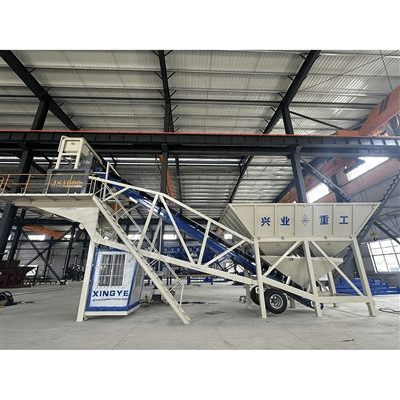
At Xingye Machinery, we design our JS-series forced mixers with high-torque gearboxes and wear-resistant alloy liners to maintain a constant "d" factor for longer service intervals. Whether you are running an HZS60 in Romania or an HZS180 in the Philippines, understanding these calculations allows you to optimize your PLC settings for maximum throughput.
Need a technical audit of your current plant's efficiency? Our engineering team can provide a detailed performance analysis and suggest upgrades for your weighing and mixing systems. Contact Xingye Machinery today for a professional consultation or to request CAD specifications for our latest high-efficiency mixers.
Related Posts :