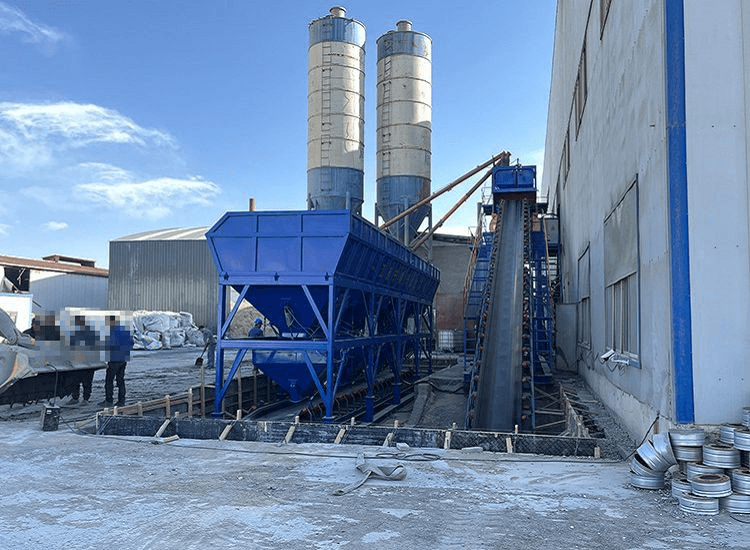
Concrete Batching Plant Classification: A Technical Guide
Stationary or Mobile? Twin-Shaft or Planetary? Choosing the right configuration is the difference between profit and project delays.
Selecting a concrete batching plant isn't just about capacity (m³/h); it’s about matching the equipment's architecture to your project’s specific constraints. Whether you are bidding on a high-rise development in Manila or a remote highway project in Saudi Arabia, the classification of your plant dictates your operational overhead and concrete quality.
1. Structural Classification: Stationary vs. Mobile
The first decision for any project manager is the plant's mobility. This choice impacts your lead time, foundation costs, and long-term flexibility.
| Feature | Stationary (HZS Series) | Mobile (YHZS Series) |
|---|---|---|
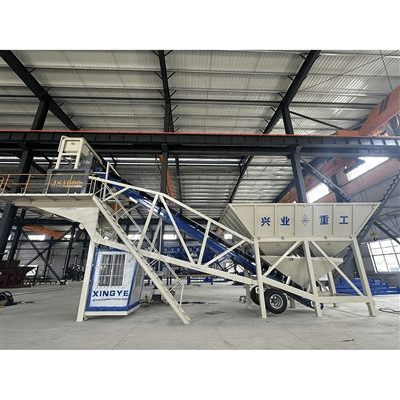
| Foundation | Requires heavy concrete foundation | Minimal or no foundation (wheeled chassis) |
| Capacity | High (up to 180m³/h+) | Medium (usually 25-75m³/h) |
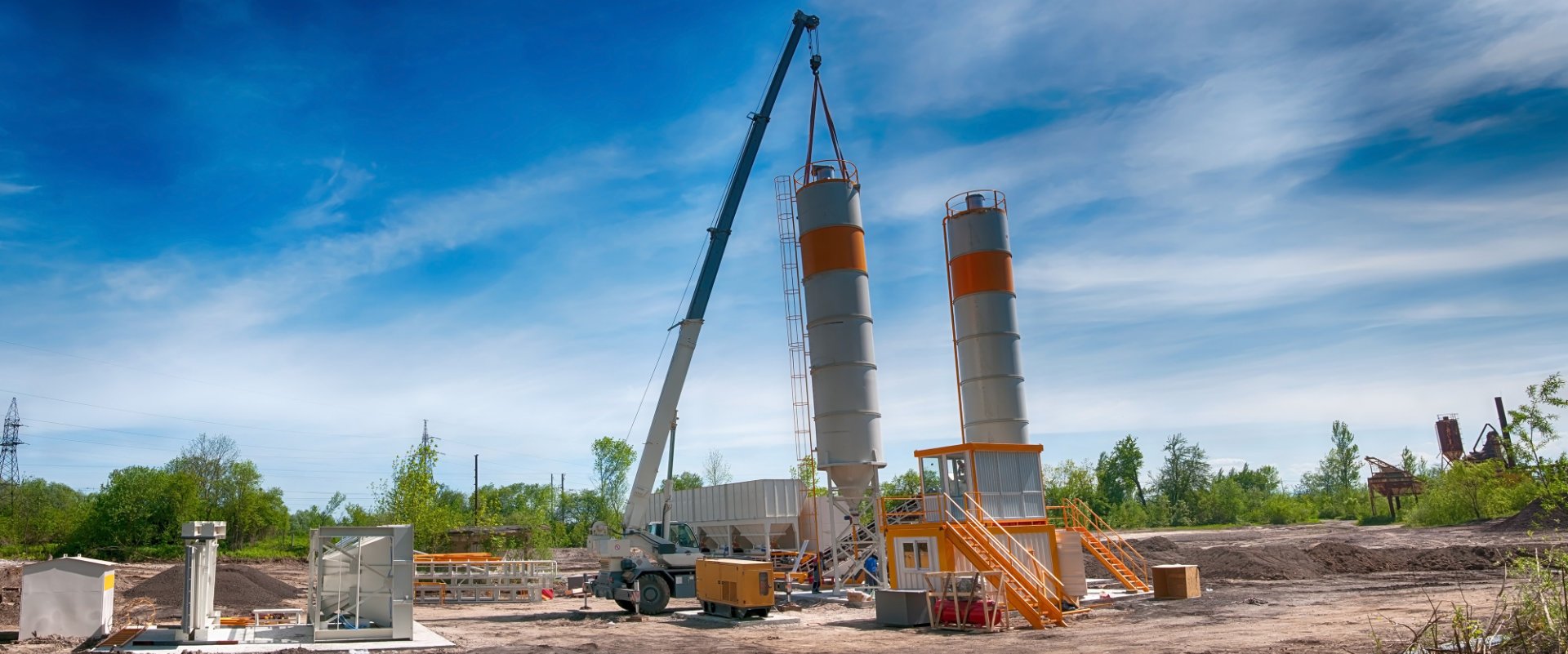
| Best For | Commercial concrete, long-term urban sites | Remote roadwork, short-term bridge projects |
| Durability | Maximum; designed for 10+ years | High; but requires more frequent mechanical checks |
2. Mixer Technology: Twin-Shaft vs. Planetary
The "heart" of the plant is the mixer. For most industrial applications, JS-series twin-shaft forced mixers are the global standard due to their high efficiency and ability to handle large aggregate sizes. However, for specialized precast projects or high-strength concrete, planetary mixers offer superior homogenization.
- Twin-Shaft (JS Series): Uses two horizontal shafts to create high-turbulence mixing. Ideal for standard construction concrete (C20–C50).
- Planetary Mixers: Uses a vertical mixing action with no "dead zones." Preferred for high-performance concrete (HPC) and colored pavers.
3. Production Process: Batch vs. Continuous
While continuous plants exist for massive dam projects, Periodic (Batch) Plants are the industry standard for B2B construction. Batching allows for precise control over every kilogram of material, which is critical for meeting international standards like ISO or ASTM.
In a batch plant, weighing and mixing occur in distinct cycles, ensuring that the water-cement ratio remains consistent—the most common pain point for engineers facing strength-test failures.
4. Weighing Systems: Cumulative vs. Independent
How you weigh your materials affects both your speed and your bottom line. Calibration drift in humid or dusty environments is a major risk for project managers.
- Independent Weighing: Each material (cement, water, additives) has its own scale. This is faster and more accurate, found in high-capacity plants like the HZS120.
- Cumulative Weighing: Materials are weighed sequentially in a single hopper. This reduces the initial cost and plant height but can be slower and slightly less precise.
Engineering Insight: The Regional Factor
In the Middle East, we recommend stationary plants with integrated chilling systems to manage high ambient temperatures. Conversely, for Southeast Asian urban sites, compact-footprint stationary plants are often the only way to meet local zoning laws while maintaining high output.
Need a technical layout for your next project? Our engineering team provides custom CAD site plans for HZS-series plants to optimize your site's workflow and logistics.
Related Posts :