Achieving High Automation in Concrete Plants: The Engineer’s Guide
Stop wasting cement and losing time. Transition from manual oversight to precision-controlled autonomous batching.
In the competitive landscape of global infrastructure, manual batching is no longer just an inconvenience—it is a financial liability. For project managers in high-growth regions like Saudi Arabia or Vietnam, the difference between a profitable project and a failed inspection often comes down to batch consistency. High automation is the only way to eliminate human error and ensure every cubic meter of concrete meets rigorous international standards.
The Cost of Manual Inefficiency
Before looking at the "how," we must understand the "why." Manual or semi-automated plants often suffer from "slump variance" and "cement giveaway"—the practice of over-dosing cement to compensate for inaccurate weighing. Automation solves these specific engineering pain points:
| Pain Point | Automated Solution | Operational Impact |
|---|---|---|
| Inaccurate Aggregate Ratios | High-precision load cells & PLC logic | ±1% measurement accuracy |
| Inconsistent Mixing Times | Preset digital timers & interlocks | Uniform concrete strength |
| Manual Record Keeping | Real-time data logging & Cloud reporting | 100% traceability for audits |
| High Labor Overhead | Centralized control interface | Reduced headcount per shift |
Step 1: Implementing the Integrated Control System
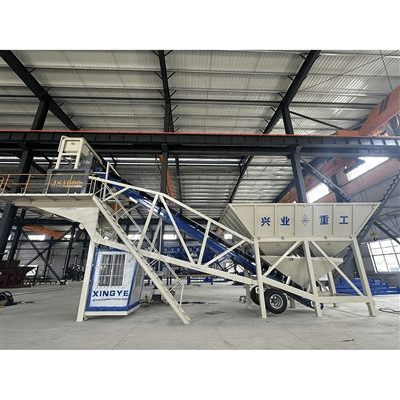
The "brain" of a high-automation plant is the Programmable Logic Controller (PLC) paired with an Industrial PC (IPC). Unlike basic relay systems, an integrated automation suite manages everything from raw material feeding in the aggregate bins to the final discharge from the JS-series twin-shaft mixer.
At Xingye Machinery, we utilize systems that allow for "one-key" operation, where the entire sequence—weighing, lifting, charging, mixing, and discharging—is handled by a synchronized algorithm.
Step 2: Precision Dosing and Recipe Management
High automation allows for the storage of hundreds of concrete recipes (grades M10 to M80). Once a recipe is selected, the system automatically adjusts:
- Material Ratio: Precise control of screw conveyors for cement and fly ash.
- Water-Cement Ratio: Automatic compensation based on aggregate moisture sensors.
- Admixture Timing: Injecting chemicals at the exact millisecond required for optimal chemical reaction.
Step 3: Real-Time Monitoring and Intelligent Adjustment
True automation isn't just following a script; it's reacting to the environment. Modern systems monitor the mixing motor's amperage—a high-tech way to sense the concrete's workability in real-time. If the mix is too dry, the system can flag the operator or make micro-adjustments to the water feed before the batch is even discharged.
Step 4: Remote Management and Maintenance
In regions with remote project sites, such as Africa or Central Asia, "Intelligent Management" means the head office can monitor production data via the cloud. This includes:
- Predictive Maintenance: The system alerts you when the mixer liners are nearing their 30,000-batch lifespan.
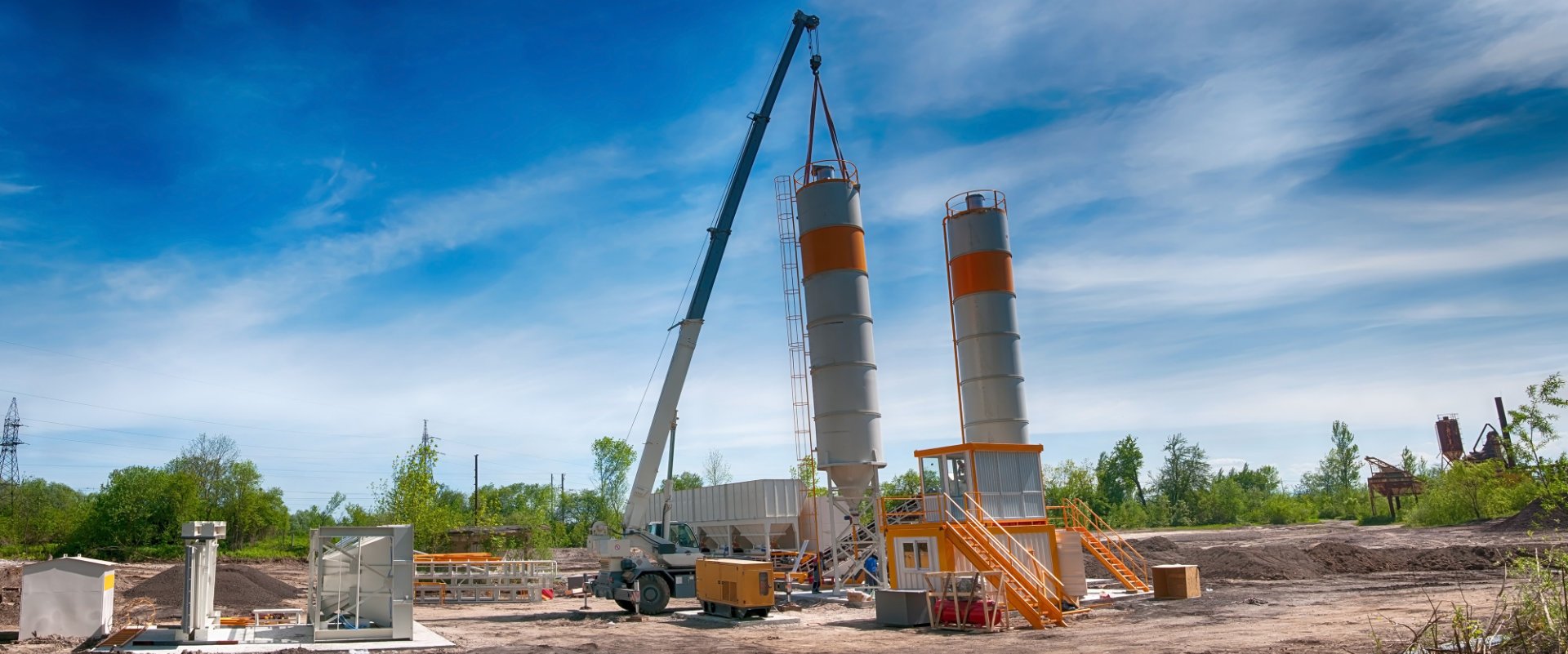
- Inventory Tracking: Real-time cement silo levels prevent unexpected downtime.
The Human Element: Technical Training
Automation does not replace the engineer; it empowers them. Transitioning to a high-automation plant requires a shift in personnel skill sets. Operators must move from "manual levers" to "system monitoring." Xingye Machinery provides comprehensive training modules to ensure your team understands the logic behind the PLC, enabling them to troubleshoot minor issues without waiting for external support.
Ready to upgrade your production? Whether you are looking to retro-fit an existing plant or invest in a new HZS120 high-output station, our engineering team is ready to design a control strategy tailored to your local climate and project requirements. Contact our technical department today for a customized automation roadmap.
Related Posts :