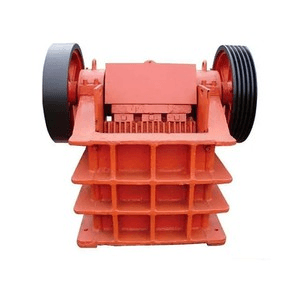
Crushing Granite & Basalt: Why Jaw Crushers Are Your Primary Defense
Stop burning through wear parts. Discover why jaw crushers are the engineered choice for high-hardness rock processing.
In the world of aggregate production, not all stones are created equal. When your site is dealing with materials like granite, basalt, or quartzite—stones with high compressive strength and extreme abrasiveness—standard crushing methods often lead to skyrocketing maintenance costs and frequent downtime.
For project managers in the Middle East and Southeast Asia, where hard rock quarries are common, the Primary Jaw Crusher remains the most reliable first line of defense. Here is the engineering logic behind why the jaw crusher is the indispensable tool for hard stone processing.
1. Superior Compressive Force for High-Hardness Materials
Hard stones often exceed 200 MPa in compressive strength. Unlike impact crushers, which rely on high-speed kinetic energy that can cause rapid wear when hitting hard rock, jaw crushers use the principle of mechanical leverage and compression. The "V-shaped" crushing chamber applies massive pressure between the fixed and swing jaw plates, effectively "snapping" the rock's internal structure.
| Material Type | Compressive Strength (MPa) | Recommended Primary Crusher |
|---|---|---|
| Granite / Basalt | 150 - 300+ | Jaw Crusher |
| River Pebble | 100 - 200 | Jaw Crusher / Cone Crusher |
| Limestone | 30 - 100 | Impact Crusher / Jaw Crusher |
2. Material Science: High-Manganese Wear Resistance
One of the biggest pain points in hard stone processing is the "wear-to-output" ratio. Xingye Machinery’s heavy-duty jaw crushers utilize High-Manganese Steel (Mn13Cr2 or Mn18Cr2) for jaw plates. These alloys are specifically designed to work-harden; the more they are struck by hard stone, the harder the surface becomes, significantly extending the service life compared to standard castings.
Key Technical Advantages:
- Deep Crushing Cavity: Optimized for high-volume feed without "bridging" or blockages.
- Eccentric Shaft Engineering: Heavy-duty forged shafts designed to handle the high-torque demands of hard rock primary reduction.
- Adjustable Discharge: Simple shim or wedge adjustments to control the output size for secondary cone or impact crushing stages.
3. Protecting Your Downstream Equipment
Using a jaw crusher as the primary stage isn't just about the first break; it's about protecting your entire plant. By reducing hard, oversized boulders to a manageable 100-200mm size, you significantly reduce the impact stress on your secondary cone crushers or vertical shaft impactors (VSI). This "staged reduction" strategy is the key to lowering your total Cost Per Ton.
4. Maintenance and Operational Simplicity
In remote sites across Africa or Eastern Europe, complexity is a liability. The jaw crusher’s design is intentionally robust. With fewer moving parts than a gyratory or impact crusher, routine maintenance—such as lubricating the eccentric bearings or flipping the jaw plates—can be performed with minimal specialized tools.
At Xingye Machinery, we also integrate dust suppression systems and reinforced toggle plates to ensure that your operation meets environmental standards while protecting the machine from catastrophic failure if non-crushable material (tramp iron) enters the chamber.
Technical Specifications Overview
Our PE and PEX series jaw crushers are engineered for 24/7 operation in the harshest environments.
| Model | Max Feed (mm) | Capacity (t/h) | Power (kW) |
|---|---|---|---|
| PE-600×900 | 500 | 50 - 160 | 55 - 75 |
| PE-750×1060 | 630 | 110 - 320 | 110 |
| PE-900×1200 | 750 | 220 - 500 | 132 |
Are you planning a new quarry project or looking to upgrade your primary crushing stage? Our engineers can provide a customized crushing circuit analysis based on your specific rock hardness and required output. Contact Xingye Machinery today for a technical consultation or to request a quote on our heavy-duty jaw crusher series.
Related Posts :