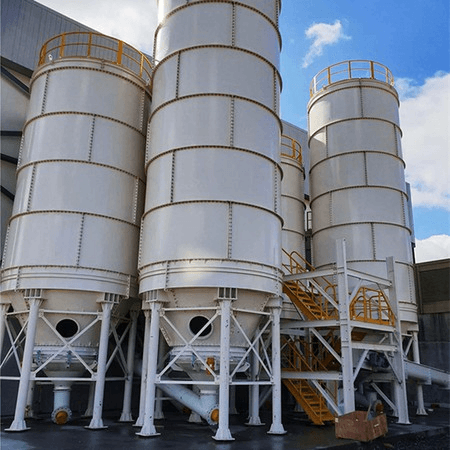
Cement Silo Selection: Avoid These 5 Critical Engineering Mistakes
From structural stability to moisture control—ensure your storage system doesn't become your site's biggest liability.
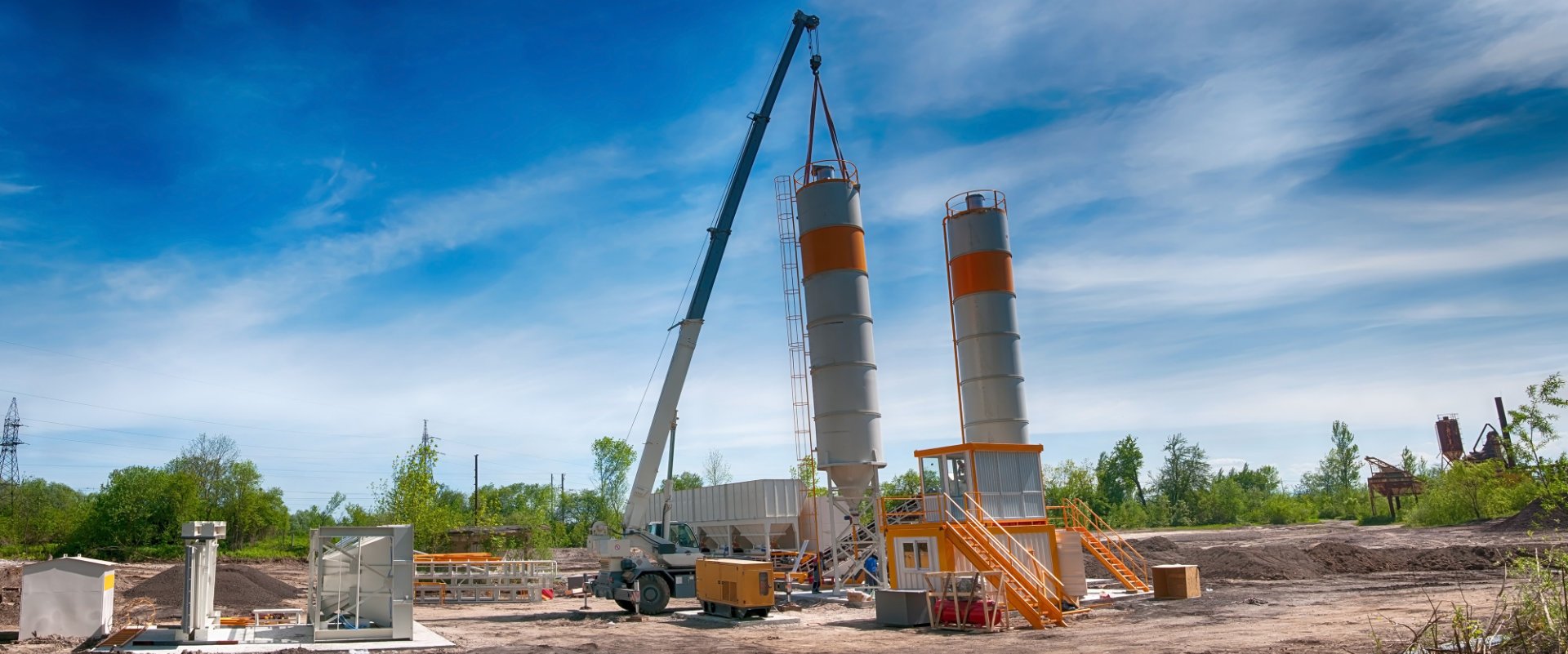
In a concrete batching plant, the cement silo is often viewed as a simple storage vessel. However, for project managers in high-stakes environments—from the humid climates of Southeast Asia to the high-wind regions of the Middle East—the wrong silo choice leads to structural collapses, material wastage, and costly downtime.
1. Structural Integrity and Foundation Load
The most catastrophic failure in a batching plant is a silo collapse. This is rarely due to the tank itself and almost always due to support leg deformation or foundation mismatch. When selecting a silo, ensure the support legs are engineered for the specific gravity of the material stored (cement vs. fly ash) and that the base plates are designed for high-strength welding to foundation embedded parts.
For international projects, we recommend verifying that the steel grade meets Q235B standards or higher to ensure the structural elasticity required to withstand seismic or wind loads.
2. Bolted vs. Welded: The Logistics Factor
For international buyers, the "Type" of silo significantly impacts the Total Cost of Ownership (TCO):
| Silo Type | Best For... | Key Advantage |
|---|---|---|
| Bolted (Sectional) | International Export / Remote Sites | Fits in standard containers; lower shipping costs. |
| Welded (One-piece) | Domestic / Short-haul sites | Zero assembly time; ready to use upon arrival. |
| Horizontal (Low-level) | Urban sites / Height restrictions | No foundation required; easy to move. |
3. Solving the "Arching" Problem
Cement and fly ash are prone to "bridging" or "arching," especially in humid environments like Vietnam or the Philippines. This stops the flow to the screw conveyor, halting production. A professional-grade silo must include:
- Pneumatic Arch-Breakers: Strategically placed nozzles that inject compressed air to fluidize the material.
- Vibrators: High-frequency external vibrators on the cone section to prevent material sticking.
- Level Indicators: High and low-level sensors to prevent overfilling and "dry runs" of the mixer.
4. Dust Management and Pressure Safety
Environmental compliance is no longer optional. A high-value silo must be equipped with a top-mounted pulse jet dust collector. This not only protects the environment but also prevents material loss during pneumatic filling from the cement truck.
Equally critical is the Pressure Relief Valve (PRV). Without a functioning PRV, the pressure built up during high-speed air discharge from a tanker can literally "pop" the silo or damage the dust filter bags.
5. Metering and Discharge Precision
The silo's performance is only as good as its discharge system. Ensure the butterfly valve at the silo cone is compatible with your screw conveyor diameter (typically 219mm, 273mm, or 323mm). Xingye Machinery silos are engineered to integrate seamlessly with JS-series mixers, ensuring that weighing systems receive a consistent, laminar flow of material for ±1% batching accuracy.
Standard Capacity Specifications
At Xingye Machinery, we manufacture silos ranging from 30t to 500t. Below are the common configurations for HZS-series plants:
- HZS25/35: 50t - 60t Silos
- HZS50/60: 80t - 100t Silos
- HZS90/120/180: 150t - 200t+ Silos
Selecting the right storage solution requires balancing site constraints with production volume. If you are planning a site layout in a challenging environment, contact our engineering team for a customized CAD silo layout and foundation specification.
Related Posts :