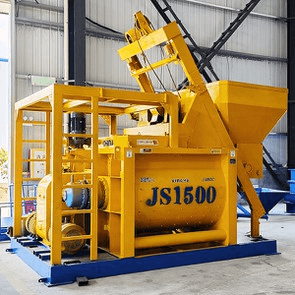
Concrete Batching Plant Components: A Complete Engineering Checklist
Beyond the mixer: Understanding the critical subsystems that drive HZS plant efficiency and concrete quality.
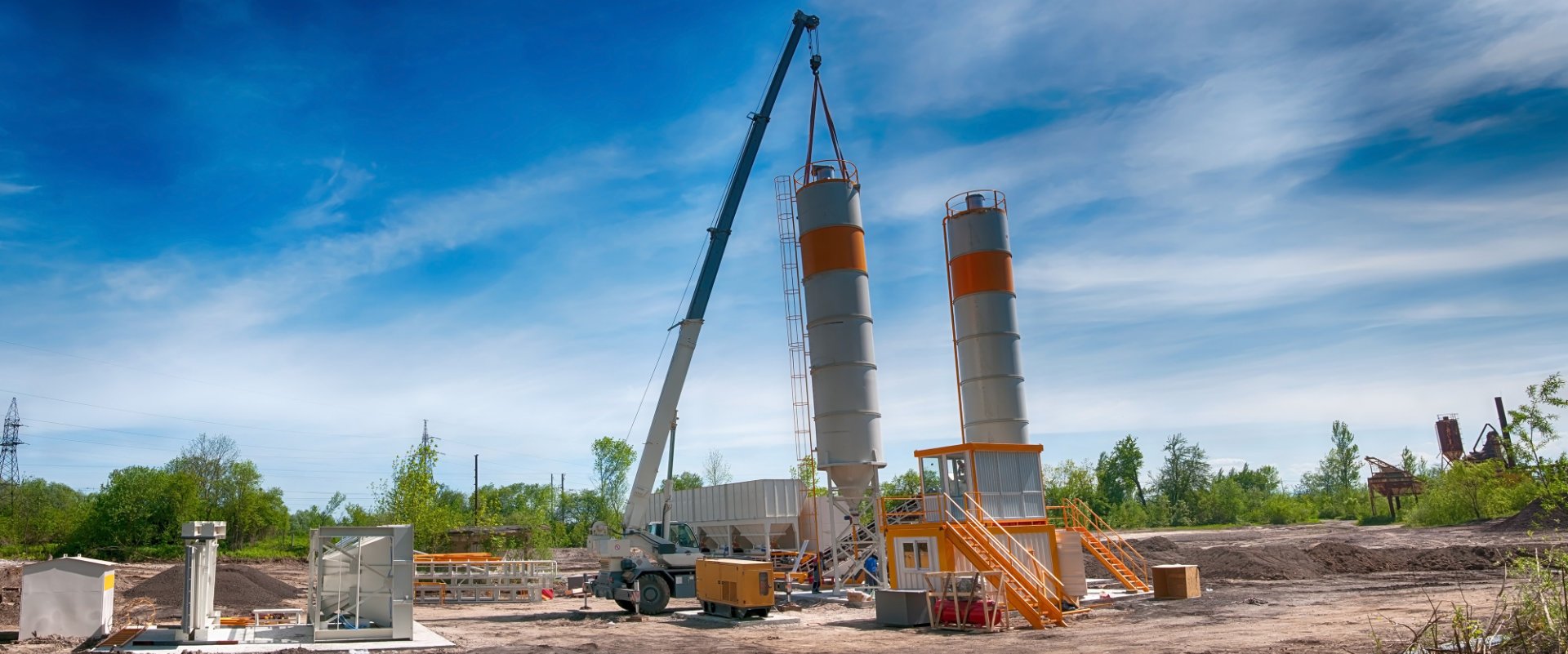
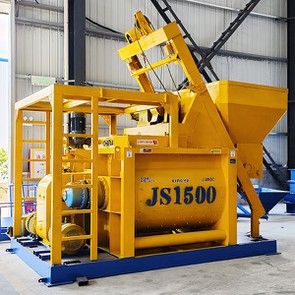
When investing in a concrete batching plant, many project managers focus solely on the mixer's capacity. However, a plant is only as reliable as its weakest subsystem. Whether you are operating an HZS60 in the humid climates of Southeast Asia or a stationary HZS120 in the Middle East, understanding the full equipment list is vital for maintaining uptime and ensuring mix consistency.
1. Material Conveying Systems: The Plant's Arteries
Efficient throughput starts with how you move raw materials. Depending on your site footprint and budget, the conveying method changes significantly:
- Skip Hoist (Feeding Hopper): Ideal for compact, small-scale plants (like the HZS25 or HZS35). It uses a rail-guided bucket system to deliver aggregate to the mixer, saving significant ground space.
- Belt Conveyors: The standard for high-output plants (HZS90 and above). Belt conveyors provide continuous feeding, which is essential for maintaining high-speed production cycles.
- Screw Conveyors: Specifically designed for cement and fly ash. These must be dust-tight to prevent material loss and environmental contamination.
2. Precision Weighing Systems
Concrete strength is a matter of chemistry. If your weighing sensors drift, your concrete fails the slump test. A professional mixing station integrates four dedicated scales:
| System | Critical Component | Engineering Impact |
|---|---|---|
| Aggregate Scale | High-precision Load Cells | Ensures structural integrity of the mix. |
| Cement Scale | Pneumatic Butterfly Valves | Prevents over-dosing of expensive binders. |
| Water Scale | Pressure Sensors & Pumps | Controls the W/C ratio for durability. |
| Admixture Scale | Corrosion-resistant Sensors | Precise delivery of chemical additives. |
3. The "Brain": Central Control Systems
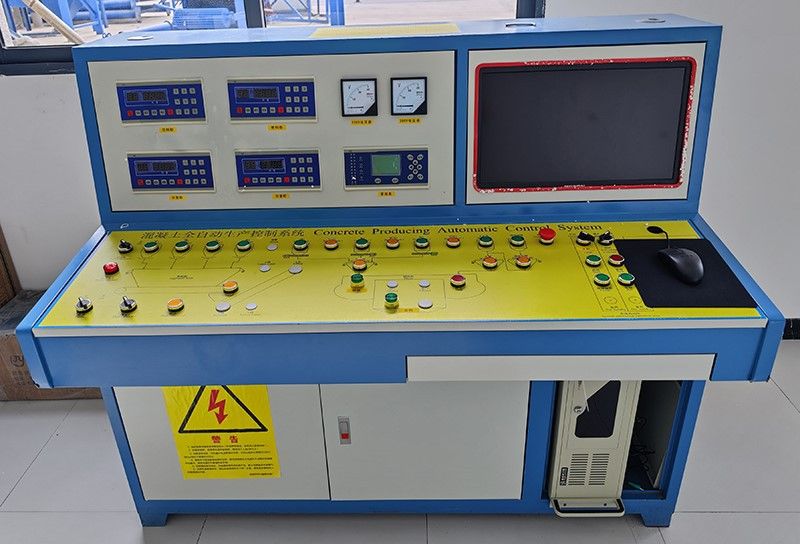
Modern construction sites require data. Our control systems move beyond simple switches to fully automated PLC (Programmable Logic Controllers). These systems allow for:
- Real-time Monitoring: Visualizing the status of every motor, gate, and sensor.
- Recipe Management: Storing dozens of mix designs (C25, C30, C40, etc.) for instant switching.
- Error Logging: Tracking calibration drift or mechanical bottlenecks before they cause downtime.
4. Power and Pneumatics
The "muscle" of the plant involves high-torque motors and heavy-duty reducers. In regions with extreme temperatures, like Saudi Arabia or Africa, we prioritize Planetary Reducers for their superior heat dissipation and torque density.
The Air Control System (including compressors and cylinders) handles the opening and closing of discharge gates. A failure here stops the entire production line, which is why Xingye utilizes reinforced cylinders and high-capacity air tanks to ensure smooth operation even under heavy load.
5. Quality Assurance Tools
A complete plant setup often includes on-site testing equipment, such as slump testers and stone grading analyzers. These tools allow engineers to verify that the output meets local standards (such as ASTM or EN) immediately after discharge.
Are you planning a new batching plant installation? Our engineering team can provide a detailed CAD layout and a customized equipment list based on your specific project requirements. Contact Xingye Machinery today for a technical consultation.
Related Posts :