Optimizing Mixing Cycles: How Long Should Your Concrete Mixer Run?
Finding the 'Golden Window' between structural integrity and peak production efficiency.
In the high-stakes world of commercial construction, time is quite literally concrete. One of the most frequent questions our engineering team receives from site managers in Riyadh and Manila is: \"Exactly how long does the cement need to be mixed?\"
The answer isn't a single number—it’s a balance of chemistry, physics, and equipment type. Mixing too long wastes fuel and can cause heat-induced flash setting; mixing too short leads to segregation and catastrophic structural failure.
1. Equipment Type: The Primary Variable
The architecture of your mixer dictates the fundamental physics of the mix. At Xingye Machinery, we categorize these into two main technologies:
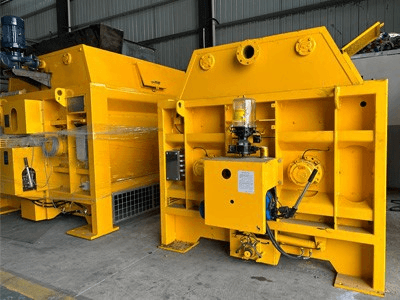
Forced Mixers (JS Series Twin-Shaft)
These units use rotating shafts with blades to create a high-energy cross-flow. They are the industry standard for dry-hard concrete and high-performance applications.
- Standard Twin-Shaft: Typically requires 60–90 seconds total cycle time.
- The Xingye Advantage: Our optimized blade geometry in the JS series allows for high-homogeneity mixing in as little as 20 to 30 seconds after all materials are charged.
Self-Falling (Drum) Mixers
These rely on gravity. The drum rotates, lifting the material and letting it fall. This is a gentler, slower process suitable for plastic concrete with higher slump.
- Standard Cycle: Usually requires 100–120 seconds per batch to ensure uniform distribution of cement paste.
2. Reference Mixing Times by Material Profile
To help your operators maintain QC standards, use the following technical benchmarks:
| Material/Condition | Mixer Type | Recommended Time |
|---|---|---|
| Dry-Hard Concrete | Twin-Shaft (Forced) | 30 - 60 seconds |
| Plastic/High Slump | Drum (Self-falling) | 90 - 120 seconds |
| Fine Sand Concrete | Forced | +20% baseline time |
| High-Performance Admixtures | Any | Requires trial batching |
3. Critical Factors Influencing Your Cycle
Beyond the machine, three environmental and chemical factors will force you to adjust your timers:
The Slump Factor
Low-slump concrete (1–4cm) offers higher internal friction. While this is great for strength, it requires more mechanical energy. For manual tamping applications common in rural infrastructure projects, mixing times must be extended to ensure the cement paste fully coats the aggregate.
Admixture Activation
Modern plasticizers and air-entraining agents require a specific "activation period." If you discharge too early, the chemical reaction hasn't stabilized, leading to unpredictable slump loss during transport to the site.
Aggregate Moisture & Scaling
In humid climates or during monsoon seasons in Southeast Asia, the water-to-cement ratio fluctuates daily. High moisture in the aggregate can lead to "balling" if the mixing time isn't adjusted to break down the surface tension of the damp sand.
Expert Recommendation
While theoretical times provide a baseline, we recommend a "Wash-Out Test" during plant commissioning. By analyzing the consistency of the first, middle, and last portions of a single discharge, you can calibrate your JS mixer to the exact second—maximizing your hourly output without risking your reputation for quality.
Are you looking to reduce your cycle times? Explore our JS Series high-efficiency mixers or contact our technical team for a custom plant calibration guide.
Related Posts :