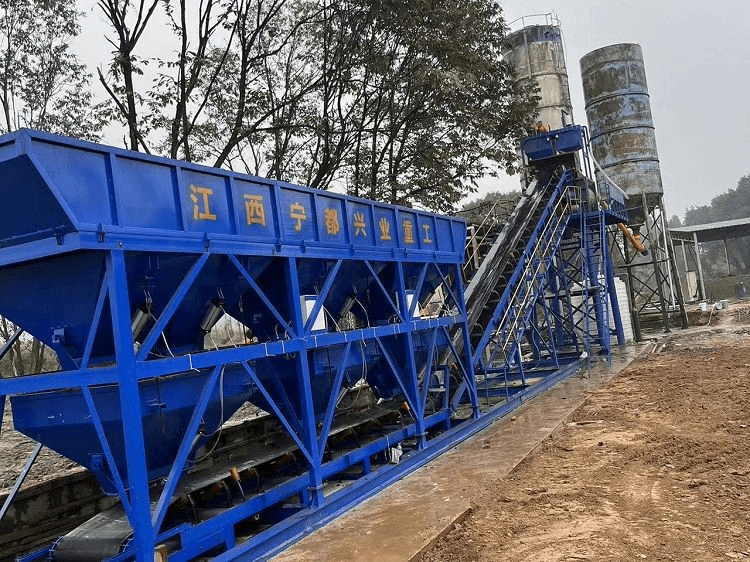
Concrete Plant Power Safety: Preventing Summer Downtime
Don't let a $5 fuse cause a $50,000 project delay. Protect your batching plant from heat-induced electrical failures.
As ambient temperatures soar across the Middle East and Southeast Asia, the electrical systems of concrete batching plants face their most critical test. In high-heat environments, internal resistance increases, insulation degrades faster, and the risk of catastrophic motor failure rises exponentially. For project managers, a power failure doesn't just stop the mixer; it risks "hot loads" hardening in the drum, leading to hours of manual chipping and thousands in lost revenue.
The Cost of Electrical Negligence
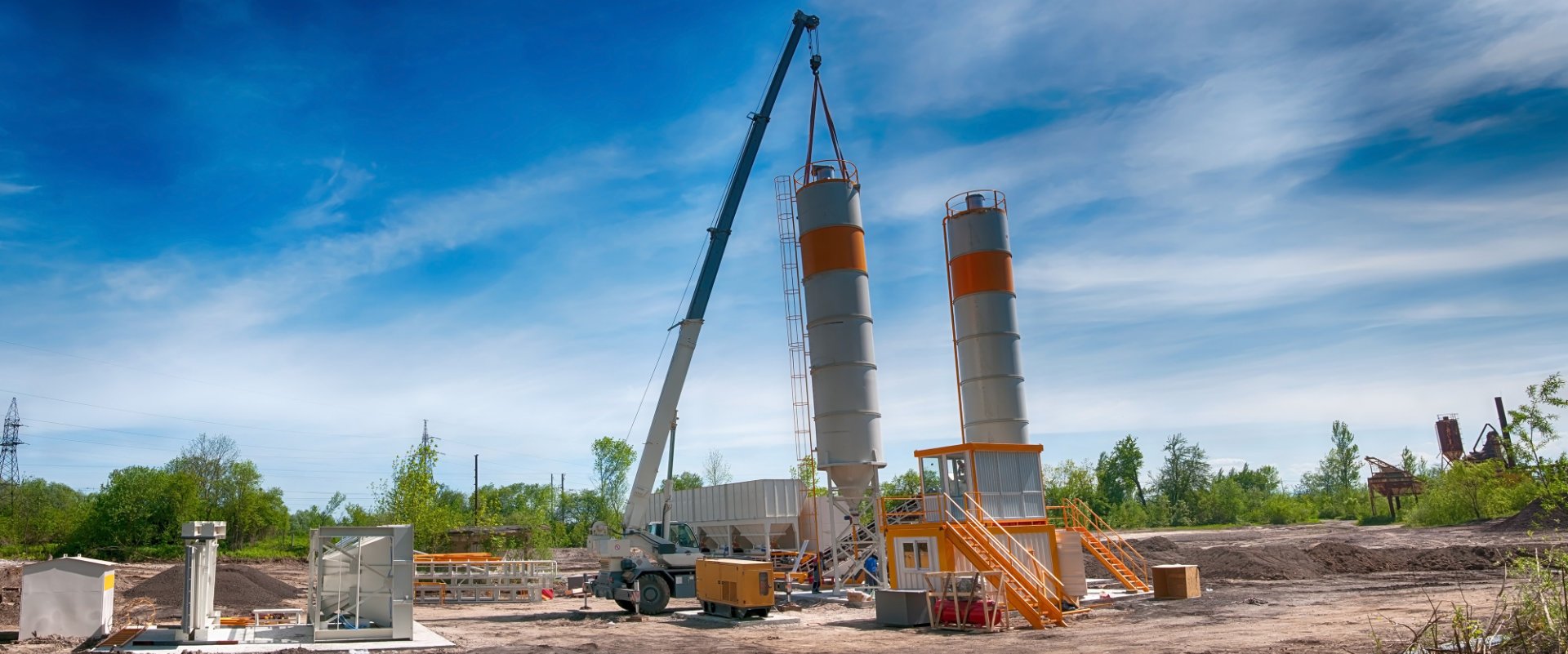
A concrete mixing station is a high-load environment. Between the JS-series twin-shaft mixers, screw conveyors, and air compressors, the surge current during startup can be 5-7 times the rated current. Without proper power management, this leads to voltage drops that damage sensitive PLC control systems.
| Component | Critical Risk Factor | Prevention Strategy |
|---|---|---|
| Mixer Motors | Overheating/Phase Loss | Install thermal overload relays and phase sequence protectors. |
| Control PLC | Voltage Fluctuations | Use a dedicated industrial UPS or high-precision voltage stabilizer. |
| Cabling | Insulation Melting | Ensure cables are rated for 70°C+ and housed in UV-resistant conduits. |
| Cement Silo Sensors | Signal Interference | Use shielded cables and ensure a common ground (≤ 4Ω). |
1. Professional Installation and Load Balancing
Every industrial project has its own electrical signature. Installation of an HZS-series batching plant must be performed by certified industrial electricians familiar with high-torque machinery. Key requirements include:
- Design Compliance: Wiring must follow IEC or local equivalent standards, specifically regarding cross-sectional area to prevent voltage drops over long distances.
- Dedicated Supervision: During peak operation, a designated technician should monitor the distribution cabinet’s ammeter and voltmeter for irregularities.
- Emergency Cut-offs: Ensure "Emergency Stop" buttons are functional and accessible at the control cabin, mixer platform, and discharge point.
2. Environmental Protection for Site Wiring
In regions like the Philippines or Romania, temporary site power often falls victim to mechanical damage. Xingye Machinery recommends the "Three-Level Distribution, Two-Level Protection" system:
- Concealment: All power lines should be buried or elevated in cable trays to avoid crushing by loaders or transit mixers.
- Moisture Control: In monsoon-prone areas, distribution boxes must maintain an IP55 or higher rating to prevent short circuits from humidity and driving rain.
- Prohibited Use: Strictly forbid the use of "makeshift" heating or cooling appliances on the same circuit as the plant’s main control system to avoid harmonic interference.
3. The Proactive Inspection Protocol
Regular inspections are the only way to catch "invisible" faults before they cause a shutdown. If you notice sparks, unusual humming from the transformer, or a "burnt" smell near the control cabinet, stop production immediately.
Never replace a fuse with copper or aluminum wire. This bypasses the safety mechanism and can lead to a total plant fire. If a fuse blows repeatedly, it is a symptom of a deeper mechanical overload or a grounding fault that requires professional diagnosis.
At Xingye Machinery, we provide comprehensive electrical schematics and remote technical support for all our global installations. If you are planning a plant setup in a high-temperature or remote environment, contact our engineering team for a customized power safety consultation.
Related Posts :