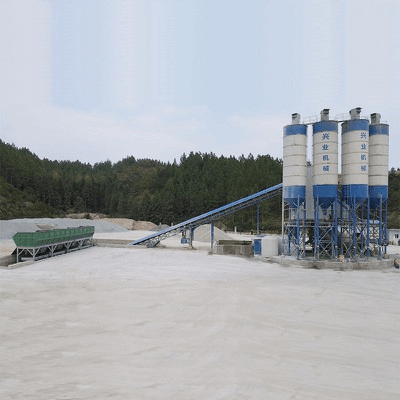
Concrete Quality Disputes: A Technical Guide to Resolution
Stop the blame game. Learn how technical experts diagnose batching plant issues, resolve cracks, and protect your margins.
In high-stakes construction projects, a single failed cylinder test or a network of shrinkage cracks can trigger a costly legal battle. When "Party A" (the client) disputes the quality of delivered concrete, the batching plant operator is often the first to be blamed. However, resolving these issues requires more than just defensive arguments—it requires technical forensics and engineering precision.
The "Blame Game": Why Quality Disputes Arise
Most disputes in the concrete industry stem from three critical failures: substandard compressive strength, uncontrolled cracking, and water seepage. When these occur, there is often a disconnect between the site team and the plant operator.
| Common Issue | Site Team's Claim | Batching Plant's Reality |
|---|---|---|
| Low Strength | "The mix was lean on cement." | Improper site curing or excessive water added by truck drivers. |
| Plastic Shrinkage Cracks | "The concrete is defective." | High wind speeds and low humidity during pour (environmental factors). |
| Slump Loss | "The concrete arrived too dry." | Traffic delays or failure to account for ambient temperature in the mix design. |
Technical Bottlenecks in Modern Batching Plants
To prevent disputes before they happen, plant managers must move beyond "standard" operations. Modern industrial requirements, especially in regions like the Middle East or Southeast Asia, demand expertise in:
- Mix Ratio Optimization: Balancing high-performance additives with locally sourced, variable-quality aggregates.
- Recycled Aggregate Integration: Implementing green standards without compromising structural integrity.
- Environmental Compliance: Transitioning to "green" stations with dust collection and wastewater recycling systems.
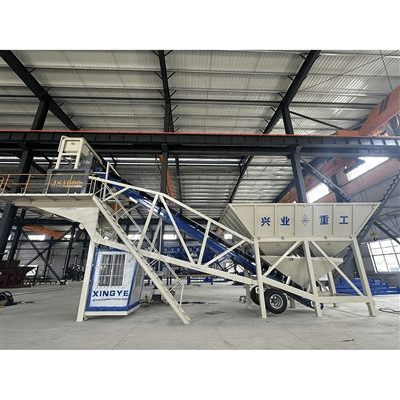
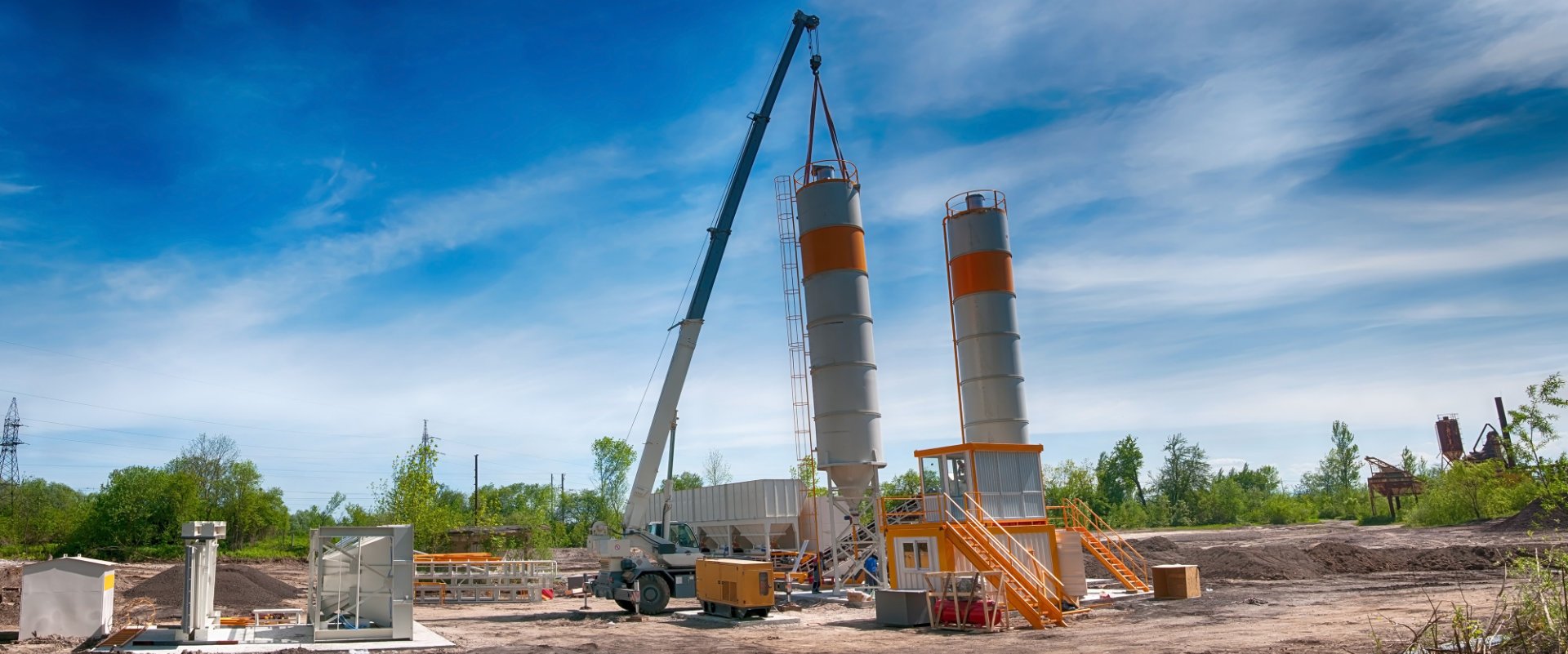
- Precision Calibration: Ensuring that stationary concrete batching plants maintain weighing accuracy within ±1% for cement and ±2% for aggregates.
The Expert Intervention Process
When a quality crisis hits a project, a systematic engineering audit is the only way to reach a resolution. Xingye Machinery's technical consultants follow a four-step recovery protocol:
1. Forensic Investigation
Experts conduct a "root cause analysis" (RCA). This involves reviewing batch logs from the HZS control system, checking raw material certificates, and performing non-destructive testing (NDT) like Schmidt Hammer or Ultrasonic Pulse Velocity (UPV) tests on-site.
2. Mix Design Recalibration
If the issue is material-based, experts re-evaluate the chemical compatibility between the cement and admixtures. In hot climates, this often involves adjusting retarder dosages or introducing chilled water systems.
3. Equipment & Operational Audit
Is the JS-series twin-shaft mixer performing efficiently? Experts check blade wear patterns and mixing times to ensure homogeneity, which is a frequent but overlooked cause of strength variance.
4. Mediation and Documentation
Providing a data-backed technical report often resolves disputes without litigation. By proving compliance with international standards (ASTM, EN, or ISO), the plant can protect its reputation and its bottom line.
Building Trust Through Precision
The best way to "solve" a dispute is to ensure it never happens. Investing in high-precision equipment and professional laboratory management is the foundation of risk mitigation. Whether you are upgrading an existing facility or planning a new site, technical excellence is your best insurance policy.
Need technical assistance with your plant's output quality? Our engineering team provides on-site audits and mix design optimization for HZS-series plants worldwide. Contact our specialists today for a consultation.
Related Posts :