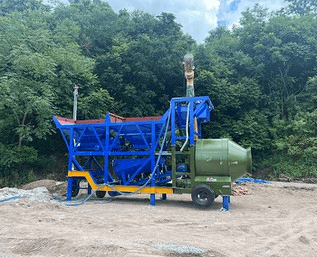
Mobile Concrete Mixing Plants: 4 Key Technical Advantages
Reduce mobilization time by 50% with modular, high-precision mobile batching technology designed for remote sites.
In the fast-paced world of infrastructure development—from highway expansions in Romania to remote desert projects in Saudi Arabia—the ability to relocate production quickly is a competitive necessity. While stationary plants offer high volume, the mobile concrete mixing station has become the preferred solution for projects requiring agility without sacrificing precision.
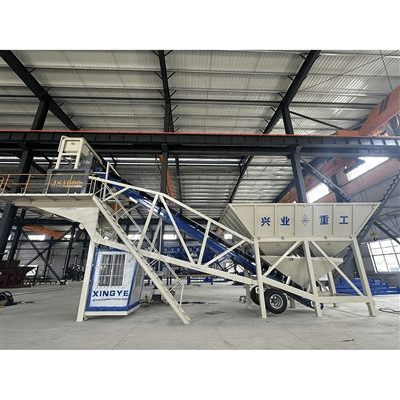
1. Modular Design: From Transport to Production in 72 Hours
The primary technical characteristic of modern mobile plants, such as the YHZS series, is the fully integrated modular structure. Unlike stationary plants that require extensive foundation work and weeks of assembly, mobile units are built on a towable chassis.
- Plug-and-Play Integration: All components—including the aggregate batcher, twin-shaft mixer, and weighing systems—are pre-wired and factory-tested.
- Reduced Logistics Costs: The compact footprint allows the entire plant to be transported via standard tractor-trailers, significantly lowering mobilization overhead for remote sites in Africa or Southeast Asia.
2. Precision Automation and Intelligent Control
A common pain point for project managers is "calibration drift" in harsh environments. Xingye Machinery’s mobile stations address this through advanced PLC-based automatic control systems.
| System Component | Technical Specification | Operational Benefit |
|---|---|---|
| Weighing Accuracy | ±1% for Cement/Water; ±2% for Aggregates | Ensures compliance with international concrete standards (ASTM/EN). |
| Control Interface | Multi-language Industrial PC | Reduces operator error and allows for instant recipe adjustments. |
| Mixer Type | JS-Series Twin-Shaft Forced Mixer | Achieves high homogeneity in shorter cycle times (60s batches). |
3. Environmental Compliance in Urban and Sensitive Zones
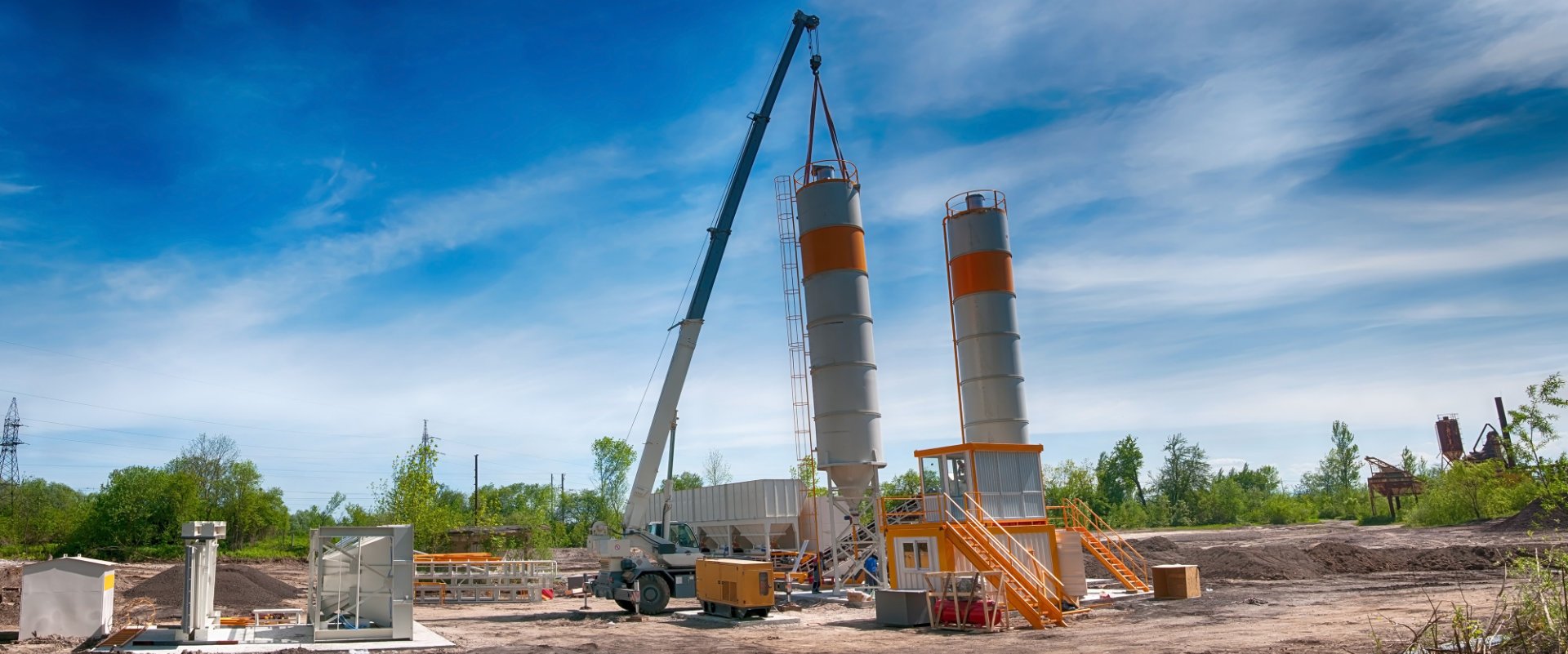
Environmental regulations are tightening globally. Our mobile stations are engineered to mitigate the two biggest site nuisances: dust and noise. By utilizing an integrated pulse dust collection system and enclosed mixing towers, these plants can operate in urban centers or environmentally sensitive regions in Eastern Europe without violating local ordinances.
Furthermore, the intelligent dosing system reduces material waste by up to 5% compared to manual batching, directly impacting the project's bottom line and sustainability rating.
4. Maintenance-First Engineering
Downtime at a remote site can stall an entire project. The technical architecture of our mobile plants prioritizes component independence. Each module (screw conveyor, water pump, air compressor) is positioned for easy access. This design ensures that routine maintenance or part replacements can be performed by site technicians without specialized heavy lifting equipment, maximizing your equipment's attendance rate.
Is a Mobile Plant Right for Your Project?
While stationary HZS plants are ideal for long-term commercial concrete supply, mobile stations excel in bridge building, road paving, and short-term dam projects. If your project timeline is under 18 months or requires frequent site changes, the flexibility of a mobile setup offers the highest ROI.
For detailed CAD layouts of our YHZS-series mobile plants or to discuss climate-specific modifications for high-heat environments, contact our engineering team today.
Related Posts :